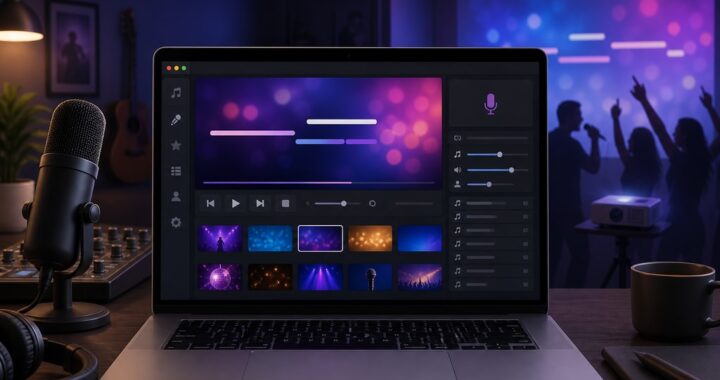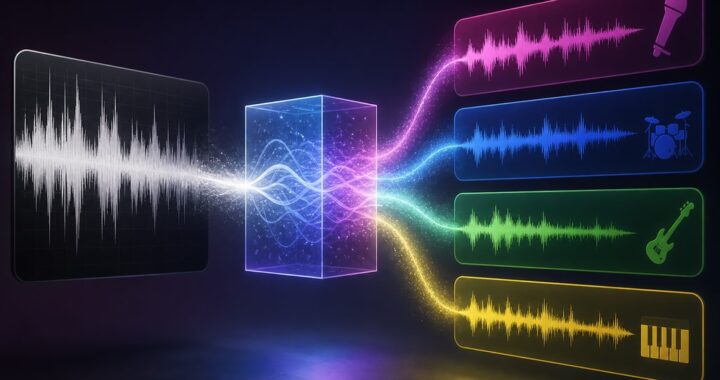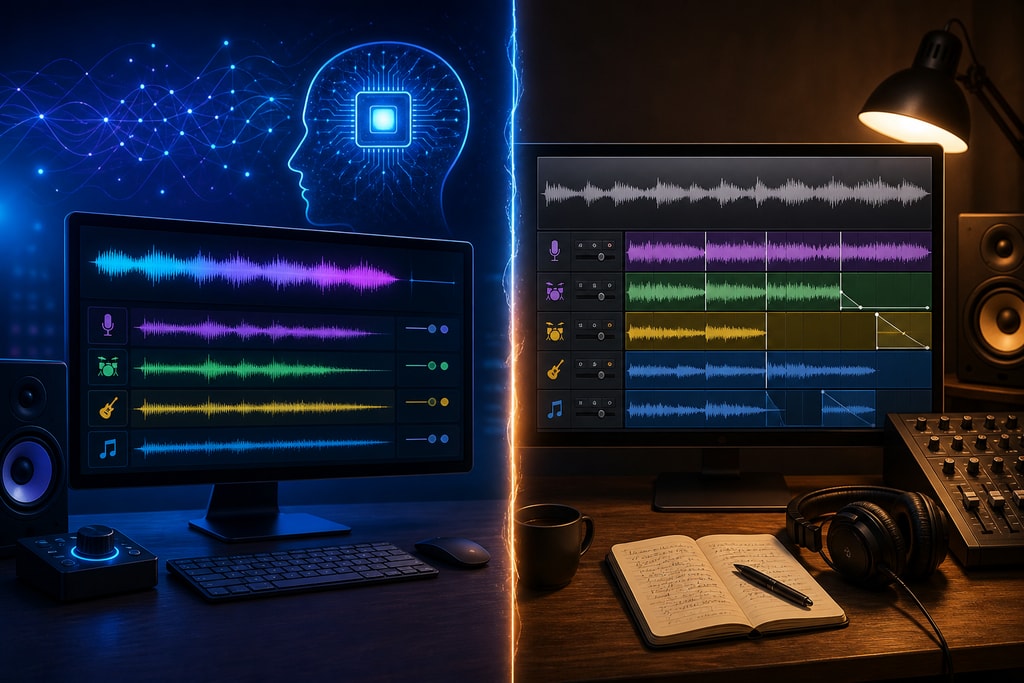
Vocal removal is integral for creators focused on karaoke and lyric videos. As AI technology progresses, understanding the nuances between AI-powered tools and manual editing becomes crucial.
Understanding Vocal Removal
Vocal removal aims to isolate or suppress the vocal tracks in audio, leaving an instrumental version. This technique is invaluable for karaoke production, creating backing tracks, or educational purposes in vocal training.
AI-Powered Vocal Removal
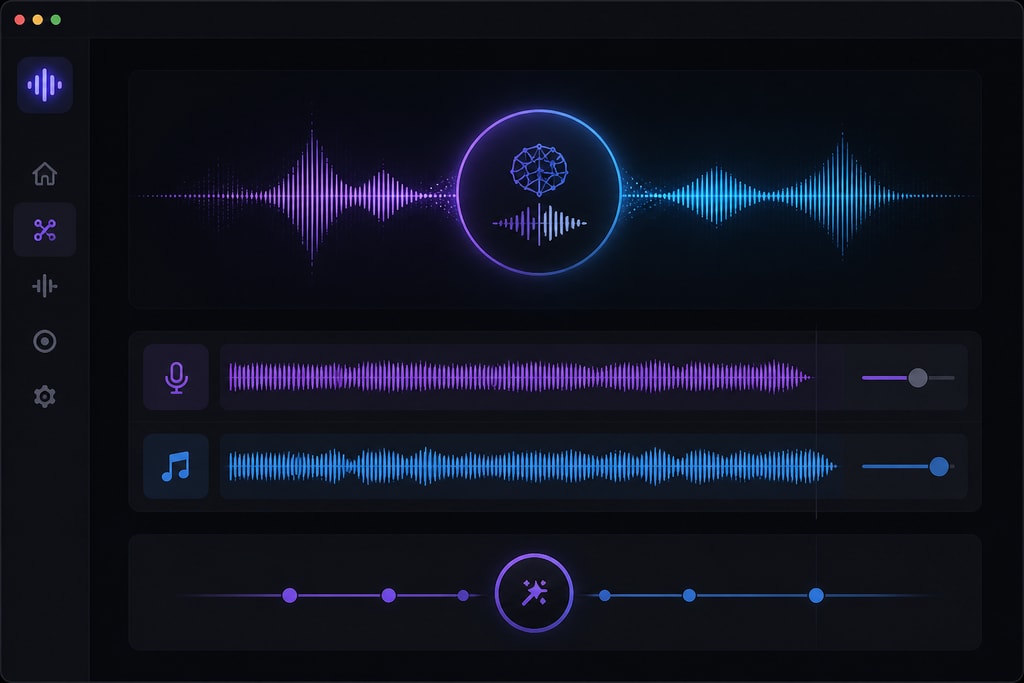
AI-based tools leverage machine learning to identify and separate vocals from instrumentals. These tools are commonly accessible, user-friendly, and efficient for users with various technical skills.
Pros of AI Vocal Removal
- Efficiency: AI tools quickly process tracks, saving time for creators.
- Ease of Use: Require minimal technical knowledge, perfect for beginners.
- Wide Availability: Platforms like KaraMagic Free offer easy access.
Cons of AI Vocal Removal
- Quality Variability: The effectiveness often depends on the track's complexity.
- Cost: While many solutions are free, advanced features might involve payment.
Practical Examples
AI tools, such as LALAL.AI or Spleeter, provide an intuitive interface for rapid vocal isolation. Users upload a track, wait for processing, and receive a new file with minimized or removed vocals.
Manual Vocal Removal Techniques
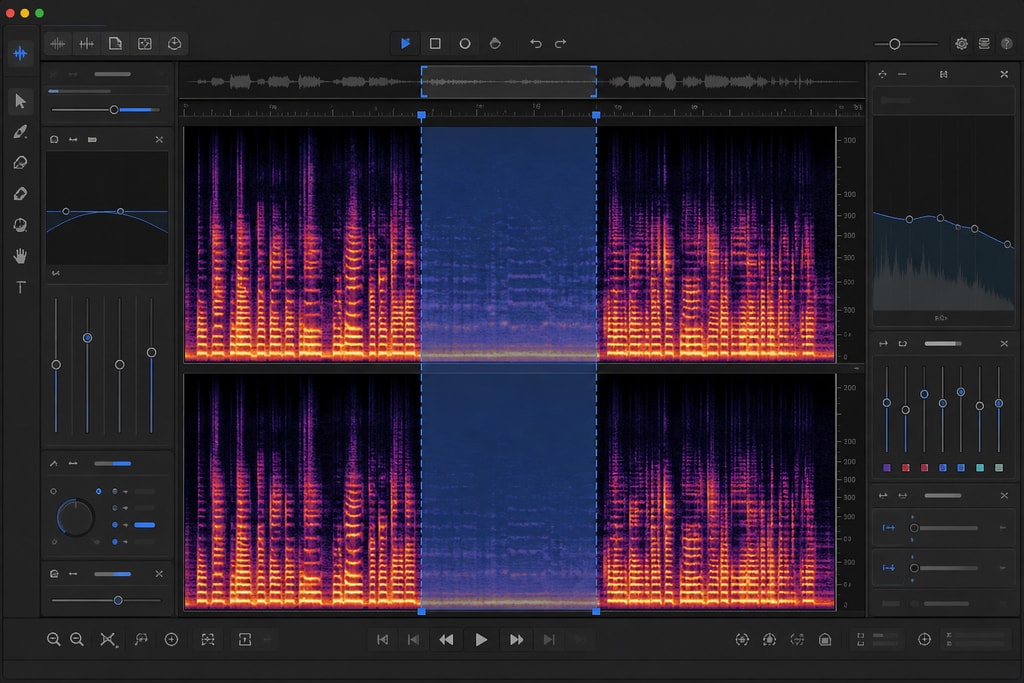
Manual editing involves tools like Audacity for phase inversion and equalization. This method allows precise manipulation of audio files.
Pros of Manual Vocal Removal
- Precision: Offers nuanced control over the removal process.
- Customizability: Perfect for complex, multilayered tracks.
Cons of Manual Vocal Removal
- Time-Consuming: Requires significant time and effort.
- Technical Skill: Users must familiarize themselves with audio editing techniques.
Mistakes to Avoid
Avoid over-filtering when using equalization, which can distort the instrumental output. Practice with simpler tracks to develop proficiency before tackling complex songs.
Decision-Making Guide
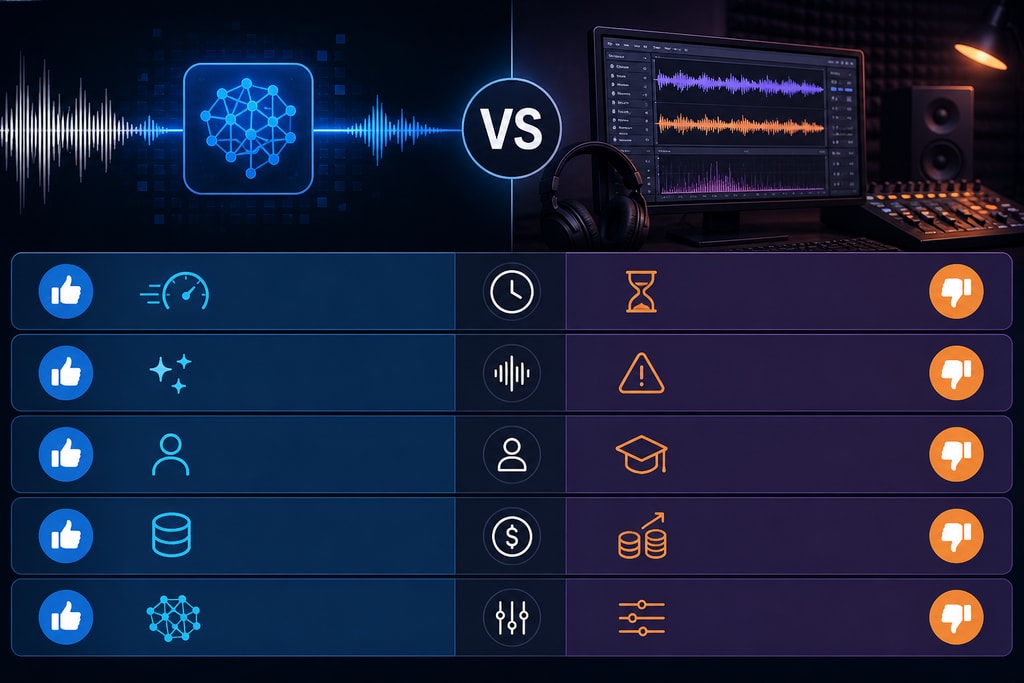
Here’s a comparison to help decide between AI tools and manual editing:
| Feature | AI Tools | Manual Editing | |————————-|—————————–|—————————–| | Efficiency | High | Low | | Ease of Use | User-Friendly | Requires Expertise | | Customization | Limited | High | | Cost | Variable | Often Free |
Internal Link: Visit KaraMagic's homepage for more insights on what tools might suit your needs.
FAQ
What is the best vocal removal tool for beginners? AI tools like KaraMagic offer simplicity and speed, ideal for those new to audio editing.
Can any song be processed with these tools? While most popular formats are supported, effectiveness may vary with track complexity and audio fidelity.
Are there free tools available for vocal removal? Yes, many basic versions of AI tools and open-source software like Audacity for manual editing are free.
Topic-Specific Advice
Decision Criteria
Choose AI tools if speed and ease of use are priorities. Opt for manual editing if customization and precision are your focus.
Enhancing Quality
When using AI tools, always review the output and consider minor manual tweaks for better quality. For manual editing, practice phase inversion techniques to refine your skills.
Conclusion
Understanding and choosing the right vocal removal tool is essential for successful karaoke and audio projects. AI solutions offer convenience and efficiency, while manual techniques offer customization and control.
Explore KaraMagic's offerings, suitable for all levels, ensuring quality outcomes and engaging experiences.
Sources and Further Reading
- Audacity Manual – Official documentation for the open-source audio editing software.
- AI-Based Audio Separation Techniques – A technical paper discussing AI methods for audio separation.
- Vocal Isolation Techniques – A comprehensive guide on different vocal removal techniques.
- KaraMagic Free – Free access to AI-based vocal removal tools from KaraMagic.