Introduction
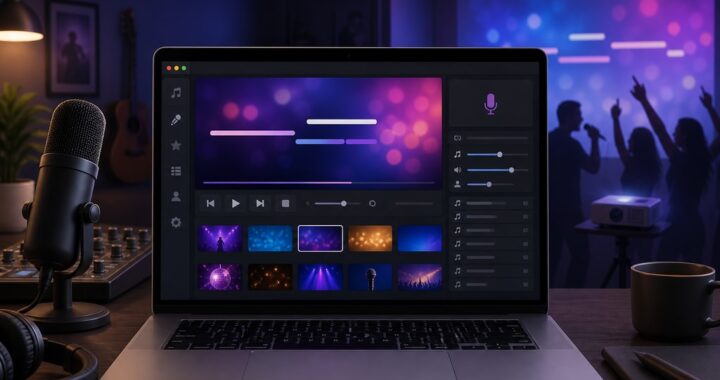
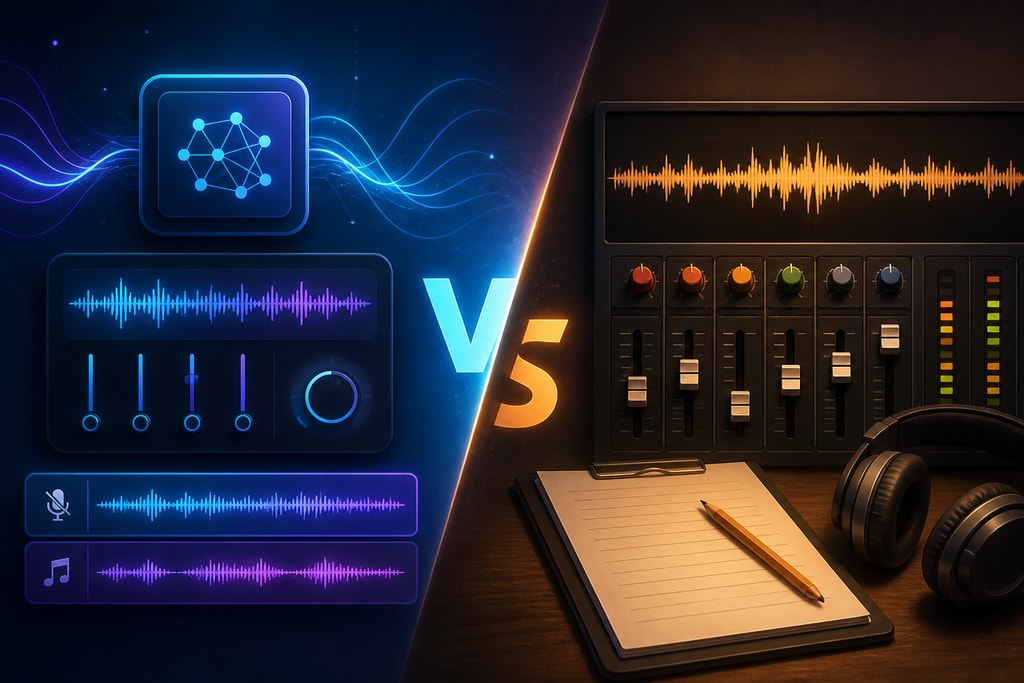
In the evolving landscape of audio production, the ability to remove vocals from songs has become more sophisticated, catering to musicians, producers, and karaoke aficionados. Previously dominated by labor-intensive manual editing, the process has been revolutionized by artificial intelligence (AI). In 2026, we compare these two approaches, offering insights into their strengths, weaknesses, and best-use scenarios.
Understanding Vocal Removal
Vocal removal is the technique of extracting vocal tracks from a mixed audio file, crucial for creating karaoke tracks or practice instrumentals. The outcome hinges on the method applied and the original audio quality.
Manual Editing Techniques
Phase Cancellation
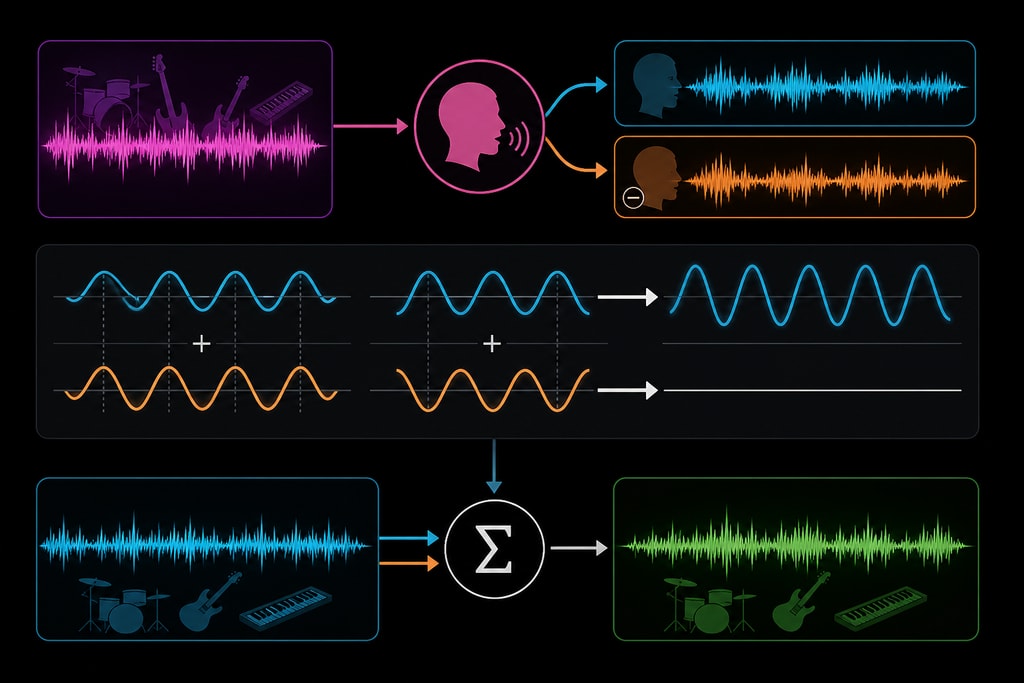
Phase cancellation leverages the centered placement of vocals in a stereo mix. By inverting one channel's phase, vocals can be diminished. This technique often affects centrally positioned instruments like bass and drums, degrading overall audio quality.
Equalization (EQ) Filtering
EQ filtering targets vocal frequencies (1 kHz to 3 kHz), reducing their presence using equalization. However, it also impacts the quality of same-range instruments, resulting in a suboptimal instrumental track.
Practical Tips for Manual Editing
- Software Choice: Popular tools like Audacity or Adobe Audition can assist with these techniques, but they require a significant learning curve.
- Custom Presets: Create and save custom EQ presets for different vocal profiles.
Limitations of Manual Editing
Manual vocal removal is resource-intensive and demands technical audio engineering expertise. Complete vocal extraction is rare, often compromising instrumental integrity. Results vary significantly based on the original mix's intricacy.
AI-Powered Vocal Removal Tools
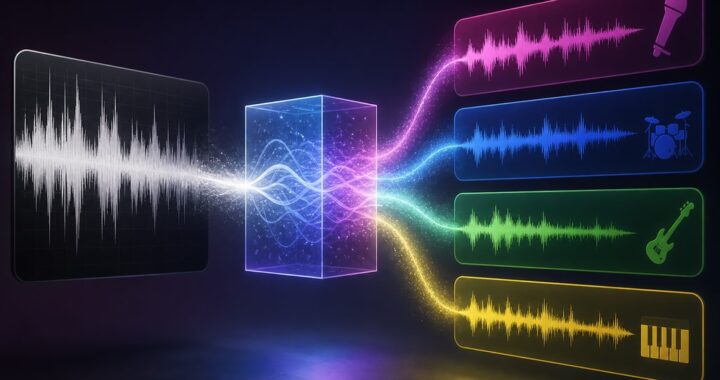
AI has catapulted vocal removal to higher accuracy using machine learning algorithms. These tools dissect audio spectrums, pinpointing human vocal patterns for extraction.
How AI Vocal Removal Works
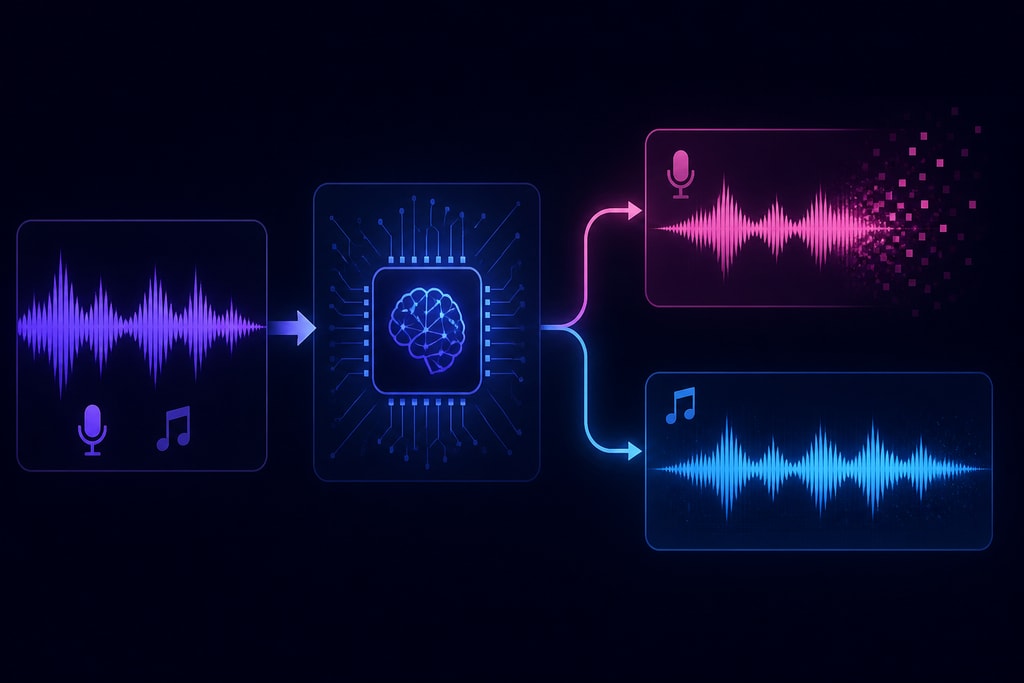
AI models are trained on comprehensive music datasets to discern and isolate vocal elements. Unlike manual methods, AI excels in processing complexity, ensuring cleaner results.
- Audio Analysis: AI models detect vocal and instrumental elements.
- Separation: The software segregates vocals from instruments.
- Output: Users receive distinct tracks, ideal for karaoke or remixing.
Popular AI Vocal Removal Tools
| Tool | Platform | Price (2026) | Features | |—————-|—————–|————–|————————————————| | LALAL.AI | Web/Desktop/API | $15/month | High-quality separation, multi-stem support | | Moises | Mobile/Web | $3.99/month | Chord detection, pitch and speed adjustment | | UVR5 | Desktop (Local) | Free | Open-source, multiple AI models support | | iZotope RX | Desktop Plugin | Varies | Professional-grade, continuous vocal suppression |
Sources: MiOffice AI, AI Music Daily, MixingGPT
Advantages of AI Tools
- Efficiency: Rapid processing compared to manual edits.
- Quality: Superior clarity, retaining instrumental integrity.
- Accessibility: User-friendly interfaces eliminate technical barriers.
Limitations of AI Tools
- Cost: Subscription fees or one-time purchases may deter some users.
- Internet Requirement: Web-based tools need internet access.
- Complexity Handling: Certain intricate mixes may still challenge AI.
Comparing AI and Manual Methods
To choose between AI tools and manual editing, evaluate these factors:
| Factor | Manual Editing | AI Tools | |——————–|———————————————|——————————————| | Time Investment| High; needs expertise | Low; quick processing | | Quality | Variable; risks artifact appearance | Generally high; cleaner outputs | | Cost | Low; uses existing options | Varies; some tools may be costly | | Ease of Use | Demands technical skill | Easy-to-use interfaces | | Flexibility | Detailed personalization available | Functionality varies by AI model |
Use Cases and Recommendations
- Karaoke Enthusiasts: Opt for AI tools like KaraMagic Free for quick karaoke track creation.
- Music Producers: While AI offers speed and quality, manual editing provides unmatched control for intricate projects.
- Educators and Performers: AI facilitates practice tracks, yet manual methods may enrich educational materials.
Mistakes to Avoid
- Ignoring Audio Quality: Start with high-quality tracks to minimize separation issues.
- Over-Dependence on Defaults: Customize settings rather than relying on preset AI outputs.
Frequently Asked Questions (FAQ)
Q: Can AI tools remove vocals from any song?
A: Most AI tools perform well but may struggle with heavily processed vocals.
Q: Are there free AI vocal removal tools available?
A: Yes, UVR5 is a notable free option with robust capabilities.
Q: Do AI vocal removers work offline?
A: Tools like UVR5 run offline. However, others require internet access.
Q: Is manual editing still relevant for vocal removal?
A: Absolutely, particularly when precision and customization are necessary.
For more insightful resources, visit the KaraMagic homepage. Enhance your projects with our KaraMagic Free tool for simplified vocal removal.